



2025 GMC Yukon vs. 2025 Chevrolet Tahoe
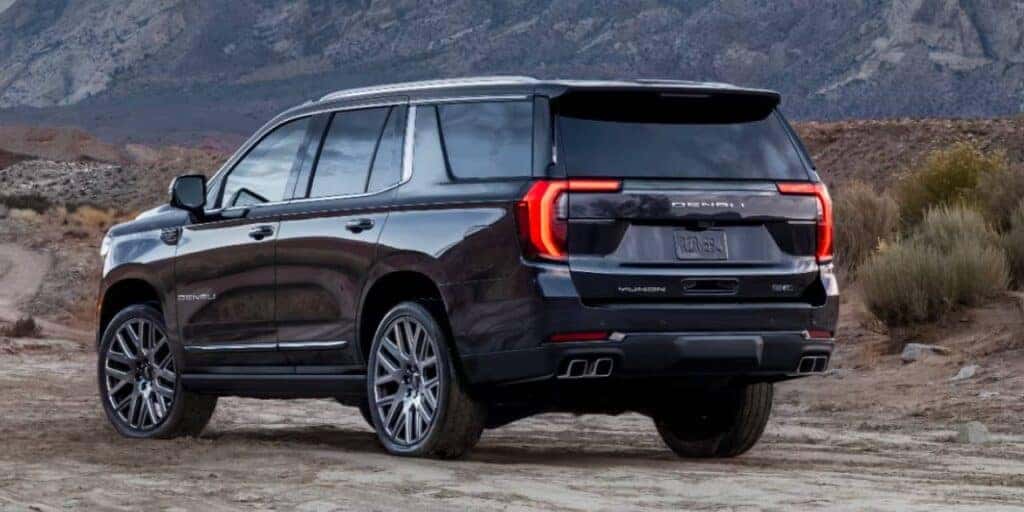
The 2025 GMC Yukon and 2025 Chevrolet Tahoe stand tall as fierce rivals in the full-size SUV category. Both rolling off General Motors assembly lines, these brawny family-haulers pack similar muscle under their hoods but differ in their luxury touches and price tags. With each getting fresh updates for 2025, our team at Hiley Buick GMC of Fort Worth has written this comparison of the GMC Yukon vs. Chevrolet Tahoe to help you figure out which best matches your needs.
Pricing and Value Analysis
Let’s start our comparison by looking at the difference between the GMC Yukon and Chevrolet Tahoe when it comes to pricing and value.
Trim Price Comparison
On the money front, the 2025 GMC Yukon positions itself as the slightly fancier cousin compared to the Chevrolet Tahoe. You’ll need at least $67,200 to drive home in the base Yukon Elevation, while the Tahoe’s starter LS model asks for $59,000. This price difference between the Tahoe and Yukon grows wider as you climb up the trim ladder, showing how GMC aims for the luxury-minded buyer. The Tahoe LS offers a 17.7-inch touch screen, tri-zone automatic climate control, and comprehensive safety features. The Elevation adds LED fog lights, a power liftgate, and GMC’s trailering system.
At the top of the heap, GMC’s Yukon Denali Ultimate starts at $101,800 with all its premium goodies. The Tahoe fights back with its High Country trim at $78,700 showing how the Tahoe vs. Yukon price gap increases at the high end.
Cost of Ownership: A Long-Term Perspective
Gas money matters when you’re buying a big SUV. Both the 2025 Yukon and Tahoe offer identical engine options and get the same mile per gallon ratings. No difference here means your weekly fill-ups will cost the same whichever badge is on your grille. While you’ll pay more upfront for the diesel option, it might save you cash in the long term if you rack up lots of miles or keep your vehicles for years. Plus, diesel-powered SUVs often hold their value better at trade-in time.
Engine Options: Power and Efficiency
There’s no difference between the GMC Yukon and Chevrolet Tahoe when it comes to engine options. Their starter engine — a 5.3L V-8 making 355 horsepower and 383 lb-ft of torque — handles daily duties and light towing just fine. If you need more power, both offer a muscular 6.2L V-8 pumping out 420 horsepower and 460 lb-ft of torque.
The dark horse in this lineup is the 3.0L Duramax Turbo-Diesel. Though it makes only 305 horsepower, it cranks out 495 lb-ft of torque — perfect for hauling heavy trailers or boats. All these engines pair with a 10-speed automatic transmission that shifts smoothly no matter what you’re doing. With identical powertrains, neither SUV can claim a performance edge, so your choice likely hinges on styling preferences and creature comforts.
Acceleration and Handling: Road Performance
These big SUVs move surprisingly well for their size. The Chevrolet Tahoe with its 5.3L V-8 can hit 60 mph in about 6.7 seconds — quick enough to merge safely onto busy highways. The Yukon performs about the same, though its weight might change things by a hair.
Where the Yukon pulls ahead is ride comfort, thanks to its available air suspension. Standard on the AT4 Ultimate and Denali Ultimate, this fancy setup automatically levels the vehicle when loaded and can raise or lower the ride height as needed. If you hit a rough patch the air suspension soaks it up better than the standard setup. The Tahoe rides nicely too, but if you value a cloud-like ride, especially on Texas’ varying road surfaces, the Yukon’s air suspension might tip the scales in its favor.
Towing Capacity: Haul With Confidence
Both SUVs handle serious towing duties with ease. Equipped with the 5.3L V-8 and Max Trailering package, the Yukon and Tahoe can pull up to 8,400 pounds — sufficient for most recreational boats, campers, or horse trailers.
Towing capacity varies by configuration. A rear-wheel-drive Tahoe with the 5.3L V-8 manages 7,900 pounds stock, while adding four-wheel drive and the Max Trailering Package boosts this to 8,200 pounds. The Yukon posts nearly identical figures. Both include trailer sway control and brake controllers, while the Max Trailering Package adds an upgraded radiator and modified rear axle ratio for regular haulers.
Fuel Economy: Optimal Efficiency
With identical engines, the Yukon and Tahoe post the same EPA numbers: 15 mpg city and 20 mpg highway with the base 5.3L V-8 and rear-wheel drive. The diesel option might save you cash long-term, getting 20 mpg in the city and 26 mpg on the highway. Diesel engines typically shine on long highway trips, where their efficiency advantage grows. For Texas drivers covering those vast distances between cities, this could mean significant savings over years of ownership.
Schedule a Test-Drive of a 2025 GMC Yukon Today at Hiley Buick GMC of Fort Worth
These GM siblings share identical engines, spacious cabins, and strong towing capabilities. The Yukon distinguishes itself with premium touches, particularly its air suspension system that notably improves ride quality on Texas roads.
While the Tahoe offers better entry-level value, the Yukon’s luxury features may justify its premium for many shoppers. Your final choice between the Yukon or Tahoe hinges on brand loyalty, budget constraints, and feature priorities. Check out our online inventory then swing by our Hiley Buick GMC of Fort Worth dealership to test-drive the 2025 GMC Yukon and experience it for yourself.
0 comment(s) so far on 2025 GMC Yukon vs. 2025 Chevrolet Tahoe